
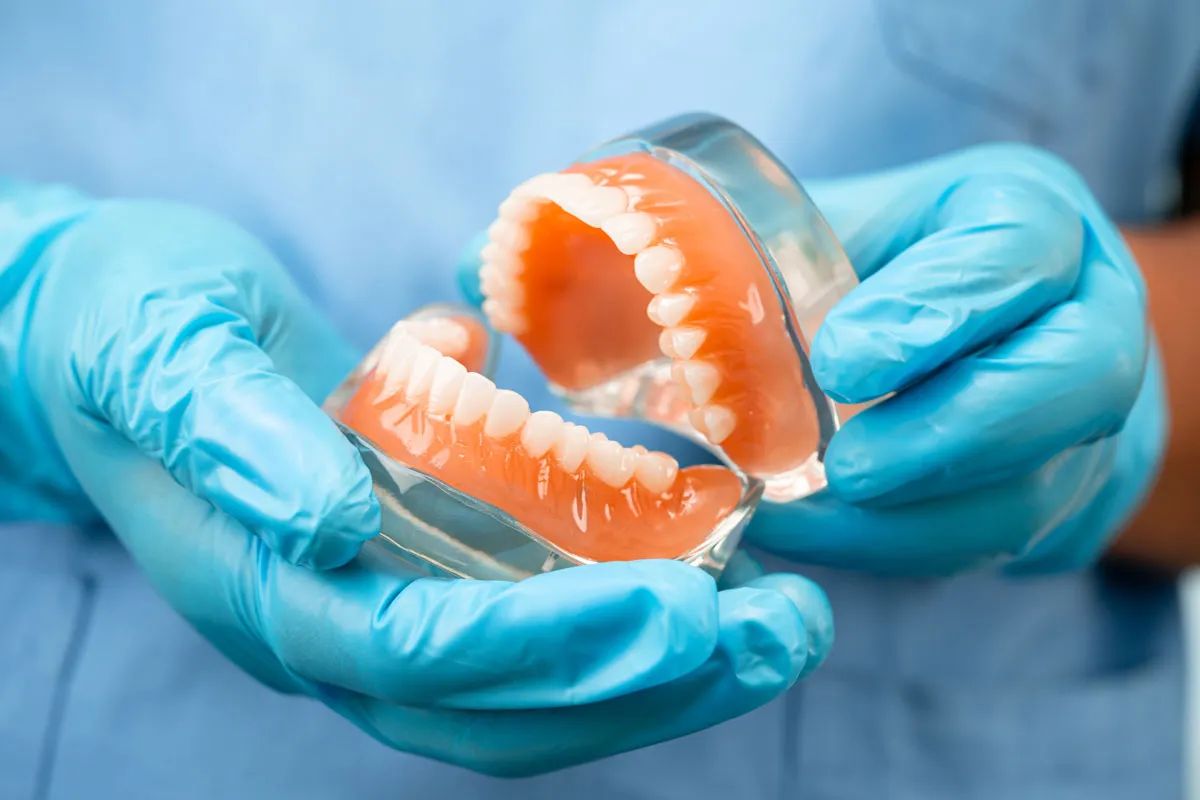
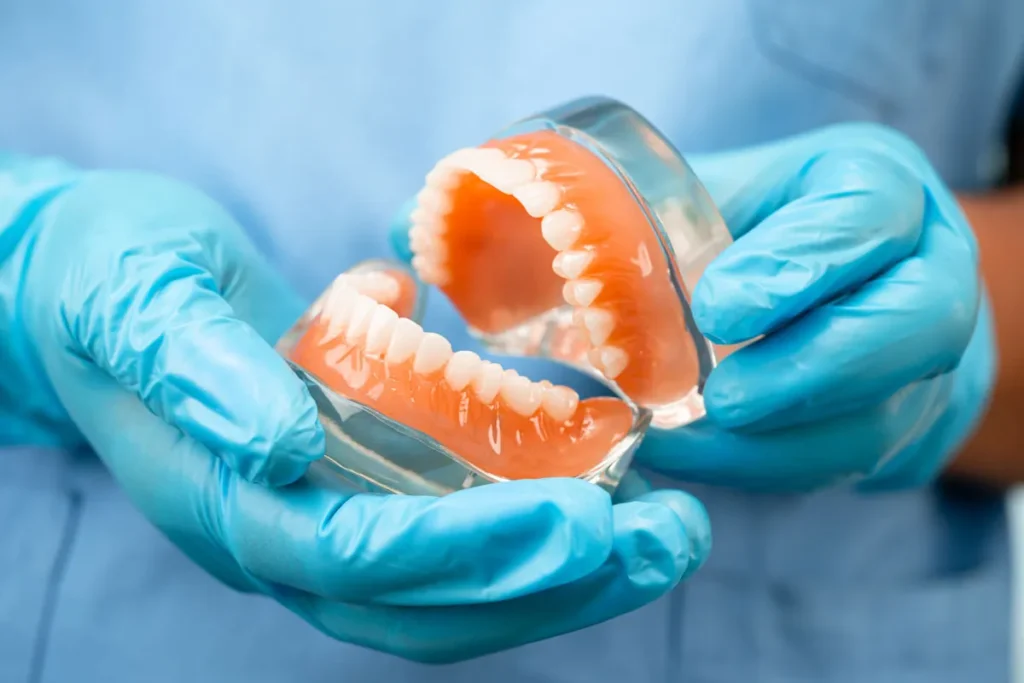
Missing teeth can really affect your confidence and life quality. Modern dentistry has two main solutions: dental implants and dentures. Knowing the differences is key to choosing the right option for you.
At GoldCity Center, we follow international care standards for personalized solutions. Dental implants are a top choice, with 3 million U.S. procedures each year and a 95-98% global success rate. Our team will help you find a treatment plan that fits your needs.
Key Takeaways
Understand the key differences between dental implants and dentures.
Consider factors such as longevity, maintenance, and jawbone health.
Discover the benefits and drawbacks of each tooth replacement option.
Learn how to make an informed decision that suits your unique needs.
Explore the success rate and effectiveness of dental implants.
Understanding Your Tooth Replacement Options
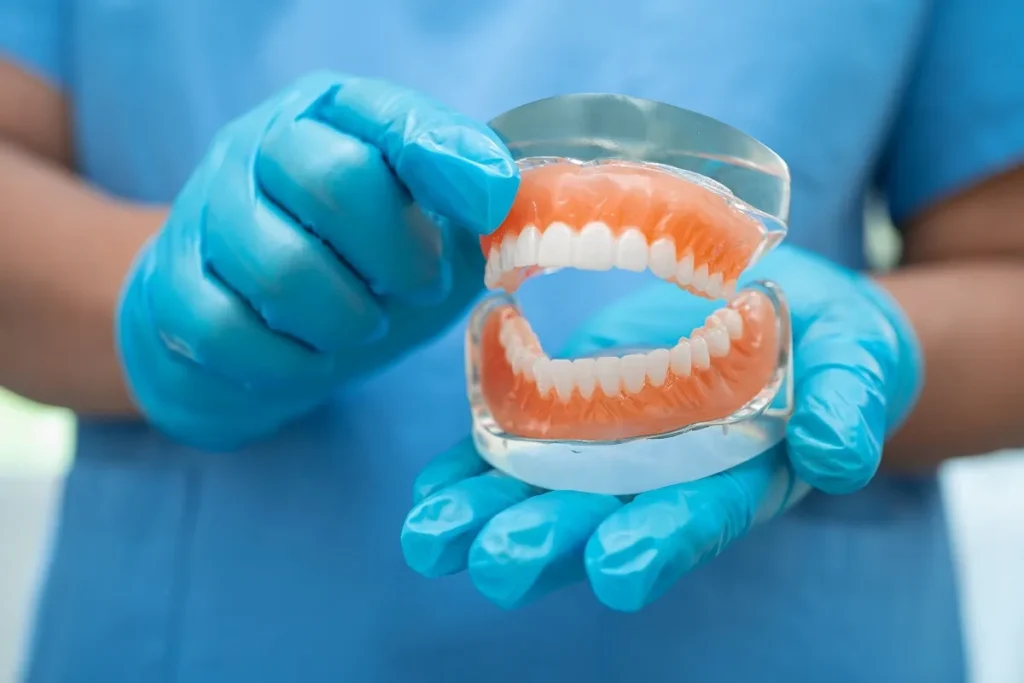
It’s important to know about tooth replacement options to make the right choice for your dental care. Today, thanks to new dental technology, you have many ways to fix your smile and get back to normal eating.
The Current State of Dental Prosthetics in America
The dental prosthetics field in America is growing fast. This is because more people are getting older and want to look good. The global dentures and implant industry is projected to grow from $12.57 billion in 2025 to $18.79 billion by 2030. This shows more people are looking for ways to replace their teeth.
In the U.S., more people are choosing dental implants every year. This is because implants are more permanent and last longer. New implant technology and more people knowing about implants’ benefits are also helping.
Key Factors to Consider Before Making Your Decision
When choosing between dentures and implants, think about a few key things. Longevity, maintenance requirements, and impact on jawbone health are important. They can really affect your choice.
Longevity: Dental implants can last for decades with proper care, while dentures may need to be replaced every 5-10 years.
Maintenance: Implants require regular brushing and flossing like natural teeth, whereas dentures need to be removed and cleaned daily.
Jawbone Health: Implants help preserve jawbone density, reducing the risk of bone loss associated with denture use.
By looking at these points and talking to a dentist, you can choose what’s best for you. This way, you’ll make a decision that fits your needs and what you want.
Partial Dentures vs Implants: A Comparative Look
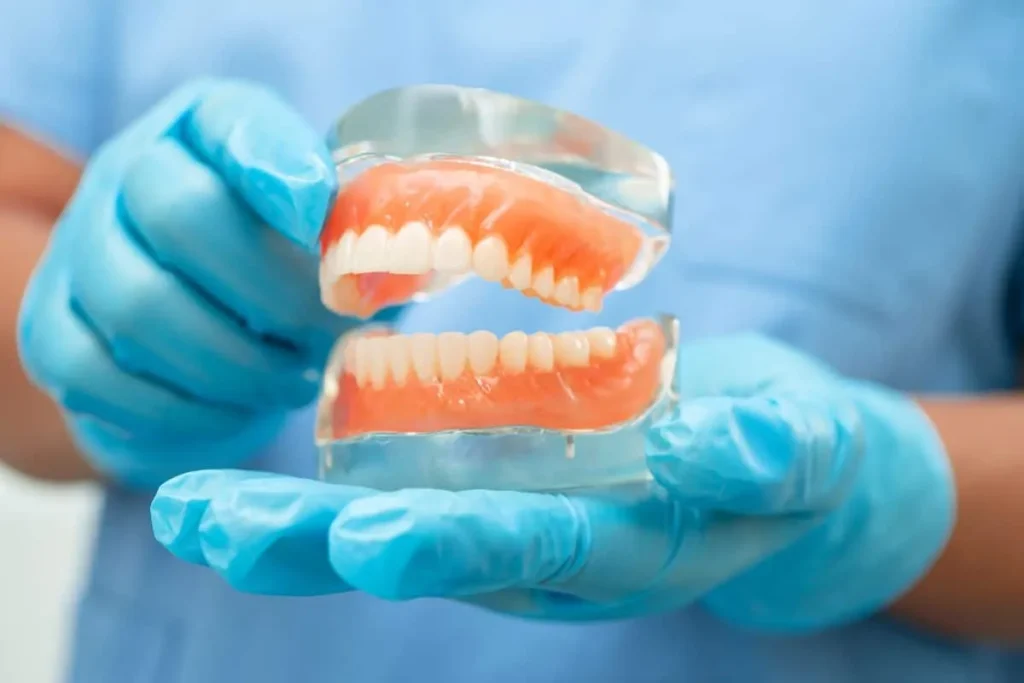
It’s important to know the differences between partial dentures and implants. Both have their good and bad sides. We’ll dive into these details below.
Durability and Success Rates
Dental implants are very durable and have a high success rate. They can last for decades with the right care. Implants have a success rate of up to 98%, making them a solid choice for tooth replacement.
Partial dentures, while less durable, have seen improvements in technology. They now last longer and are more comfortable.
Cost Analysis: Initial Investment vs. Lifetime Value
Getting dental implants costs more upfront than partial dentures. But, implants are more cost-effective in the long run. They need less maintenance and last longer.
Effects on Jawbone Health and Facial Structure
Dental implants help keep the jawbone healthy by integrating with the bone. This stops bone loss that happens with dentures. It keeps the face looking good and prevents sagging.
Partial dentures can cause bone loss if not fitted right or if the bone is weak.
Comfort, Functionality, and Quality of Life
Implants are very comfortable and work like real teeth. They let you eat, speak, and smile without dentures falling out.
Partial dentures are also comfortable but not as stable as implants. New denture designs have made them better, though.
In conclusion, choosing between partial dentures and implants depends on many things. Your health, budget, and what you prefer are key. Think about durability, cost, jawbone health, and comfort to make the best choice for you.
Making the Right Choice for Your Dental Future
Choosing between dentures and implants is a big decision that affects your dental future. It’s important to know the difference between dentures and implants. This knowledge helps you make a choice that fits your needs and lifestyle.
When deciding, think about durability, cost, and how they affect your jawbone and face. Dentures and implants have their own pros and cons. Understanding these differences helps you make the best choice.
Choosing the right option for your dental future means looking at your needs, budget, and preferences. By knowing the main differences between dentures and implants, you can pick the best one for your life and future.
Talking to a dental professional can give you personalized advice. They can help you decide which tooth replacement is best for you. This ensures your choice meets your unique needs.
FAQ
What is the main difference between dentures and dental implants?
Dentures sit on the gums and are removable. Dental implants are fixed into the jawbone. This makes implants more stable and permanent.
Which is better: dentures or dental implants?
It depends on your needs and health. Implants are more stable and natural but need a strong jaw and surgery. Dentures are easier to get and less expensive but need more care.
Are dental implants more durable than dentures?
Yes, implants last longer than dentures. With care, implants can last decades. Dentures may need to be replaced every 5-10 years.
How do dentures and implants affect jawbone health?
Implants help keep the jawbone healthy by stimulating it. Dentures can cause bone loss, changing the face.
What are the pros and cons of choosing dentures over implants?
Dentures are less expensive and easier to get. They’re good for those with less jawbone. But, they need more care and can affect taste and comfort. Implants are more stable and natural but cost more and require surgery.
Can I get dental implants if I have significant bone loss?
Significant bone loss makes implants harder but not impossible. Bone grafting can help, making implants a good option for many.
How do the costs of dentures and implants compare?
Dentures are cheaper at first. But implants are more cost-effective over time because they last longer and need less maintenance.
What is the difference between partial dentures and implants?
Partial dentures fill gaps between teeth and are removable. Implants replace missing teeth directly and are fixed. Implants are more stable and better for bone and teeth health.
Are false teeth (dentures) better than implants?
“Better” depends on your situation. Dentures are good for some, but implants are generally better for function, comfort, and long-term benefits.
How do dental implants versus dentures impact quality of life?
Implants greatly improve life by restoring chewing and speech. They also boost confidence. Dentures can also improve life but may need more adjustments and can affect comfort.
National Center for Biotechnology Information. Evidence-Based Medical Insight. Retrieved from https://pmc.ncbi.nlm.nih.gov/articles/PMC6854267/