
Seeing white material in your extraction socket might worry you. But, it usually means your body is healing naturally. At GoldCity Center, we want to tell you that this white stuff is often granulation tissue. It’s a key part of getting better.
Found a white spot after tooth extraction? Learn amazing best ways to spot scary dry socket and ensure top-rated dental healing.
Granulation tissue shows your body is healing as it should. It’s a sign that your body is responding well to tooth extraction. This means your healing is on track.
Knowing about granulation tissue can make you feel better. It shows your body is working to heal you. GoldCity Center is here to help you through this process with care and expertise.
Key Takeaways
The white material after tooth extraction is often granulation tissue.
Granulation tissue is a sign of the body’s natural healing process.
It’s a normal and expected part of recovery.
Understanding granulation tissue can help alleviate concerns.
GoldCity Center provides trusted expertise and patient-centered care.
Understanding Post-Extraction Healing Process
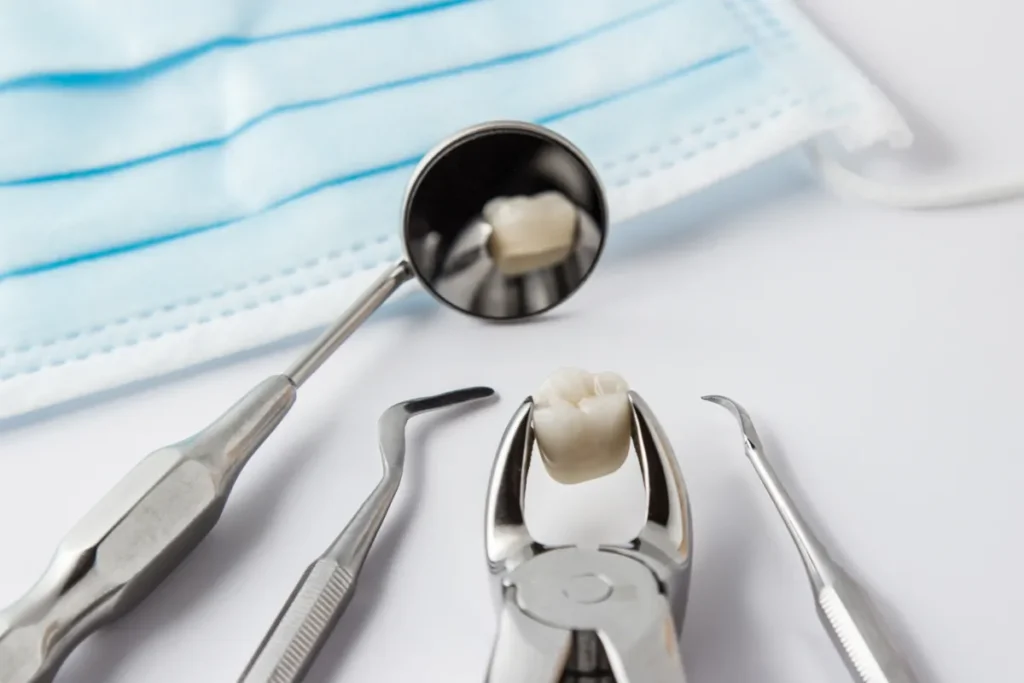
Tooth extraction starts a healing process. This includes clot formation, tissue change, and socket closure. It’s key for the site to heal and for your oral health.
Initial Blood Clot Formation
The healing starts right after the tooth is pulled. A blood clot forms first. This clot protects the bone and nerves under the socket.
It’s a vital step. It helps the healing process by setting the stage for more tissue growth.
Transformation to Granulation Tissue
As healing goes on, the blood clot turns into granulation tissue. This tissue is full of blood vessels, white blood cells, and collagen. This change happens in three to seven days after the extraction.
Composition of Granulation Tissue
Granulation tissue is key in filling the socket. It fights off infection and helps new bone and gum tissue grow. It’s a vital part of healing.
White Spot After Tooth Extraction: Normal or Concerning?

Seeing a white spot in your gum after a tooth extraction is common. It’s important to know if it’s just healing or if there’s a problem. The white spot, also known as granulation tissue, is a normal part of healing.
Normal Appearance of White Tissue
The granulation tissue after a tooth extraction is usually white or cream-colored. It might feel soft or slightly firm. This tissue is made of cells that help start the healing process.
Having this white tissue is a good sign. It means your body is healing well after the extraction.
Timeline of Healing and Tissue Development
The time it takes for the granulation tissue to form and go away varies. But it usually follows a certain pattern. A few days after the extraction, the tissue starts to form. It can last for several days to a couple of weeks.
Warning Signs to Watch For
Even though the white spot is usually normal, there are warning signs. These signs could mean complications like dry socket or infection. Look out for severe pain, swelling, or a bad taste in your mouth.
Severe Pain: If the pain is intense or getting worse, it could be a sign of a problem.
Swelling: Too much swelling or swelling that doesn’t go away can mean infection.
Foul Taste: A bad taste or smell that lasts can be a sign of infection or dry socket.
If you notice any of these symptoms, you should talk to your dentist right away. They can help figure out what’s going on and treat it.
Conclusion
After a tooth extraction, it’s normal to worry about healing. Seeing white stuff or granulation tissue in the socket can be scary. But, it’s usually a sign that healing is starting.
It’s important to watch the socket for any signs of trouble. This includes dry socket pus or too much bleeding. If the white stuff falls out, see a dentist to avoid infection.
Knowing how to heal and what to look for can make you feel better. It helps you understand what’s happening in your mouth. This knowledge can make your recovery smoother.
Stay informed about your healing to feel more confident. If you’re worried or have questions, talk to your dentist. They can give you the care and advice you need.
FAQ
What is the white stuff in my tooth extraction site?
The white stuff is usually granulation tissue, which is a normal part of the healing process. It forms as your body repairs the socket and protects the area.
Is white tissue after tooth extraction a sign of infection?
Not necessarily. White or yellowish tissue is often normal healing tissue, but if it is accompanied by severe pain, swelling, or bad odor, it may indicate infection.
How long does granulation tissue take to form after tooth extraction?
Granulation tissue typically begins forming within a few days after the extraction. It continues developing over the first one to two weeks.
What does healthy granulation tissue look like?
Healthy granulation tissue may appear white, cream, light yellow, or slightly reddish. It usually looks soft and moist, not dry or foul-smelling.
Can I remove the white stuff from my tooth extraction site?
No, you should not try to remove it. Disturbing the tissue can delay healing and may lead to complications like dry socket.
How long does it take for the white spot to resolve after tooth extraction?
The white healing tissue gradually reduces as the gum closes over the socket. Initial healing takes about 1–2 weeks, while complete healing can take several weeks.
What are the warning signs that I should watch for after tooth extraction?
Warning signs include severe or worsening pain, excessive bleeding, swelling that does not improve, pus discharge, fever, or a bad taste in the mouth.
Is it normal to have a white clot after tooth extraction?
Yes, it can be normal. A blood clot forms first, and as healing progresses, it may appear white as new tissue develops over it.
What is the role of granulation tissue in the healing process?
Granulation tissue helps protect the extraction site, supports new blood vessel formation, and allows new gum tissue and bone to grow during healing.
References
https://pmc.ncbi.nlm.nih.gov/articles/PMC10775501/