


[Add image here]
Removing impacted wisdom teeth near a nerve needs careful planning. We use advanced imaging to avoid nerve injury. At GoldCity Center, we focus on our patients, combining the latest tech with expert surgery for the best results.
Removing impacted molars is a detailed task. Our team uses the latest methods to safely take out the teeth. This way, we lower the chance of nerve damage and help you heal quickly.
Understanding the challenges of impacted wisdom teeth removal is key. At GoldCity Center, we’re all about clear talk and plans made just for you. This way, we aim for the best results for you.
Key Takeaways
Careful planning is key for safe impacted wisdom teeth removal.
Advanced imaging techniques help prevent nerve injury during surgery.
GoldCity Center’s patient-centered approach ensures optimal outcomes.
Modern techniques minimize the risk of nerve damage.
Personalized care supports a smooth recovery.
Understanding Impacted Wisdom Teeth and Nerve Proximity

It’s important to know how impacted wisdom teeth and nerves interact. Impacted wisdom teeth can cause pain and problems, mainly if they’re near important nerves.
Types of Wisdom Tooth Impactions and Their Risk Levels
Wisdom tooth impactions are divided by their position and depth in the jaw. The main types are:
Mesial Impaction: The tooth points towards the front of the mouth.
Vertical Impaction: The tooth is in the right spot but hasn’t come out.
Horizontal Impaction: The tooth leans towards the next tooth.
Distal Impaction: The tooth leans towards the back of the mouth.
Each impaction type has its own risk level, with nerve proximity being a big concern. For example, horizontal impactions are risky because they’re close to the inferior alveolar nerve.
Critical Nerves at Risk During Extraction
Removing impacted wisdom teeth can harm several important nerves in the jaw. The two main nerves at risk are:
Knowing these risks is key for dentists and patients. By checking the impaction type and nerve closeness, dentists can plan a safe extraction.
Pre-Surgical Assessment and Preparation
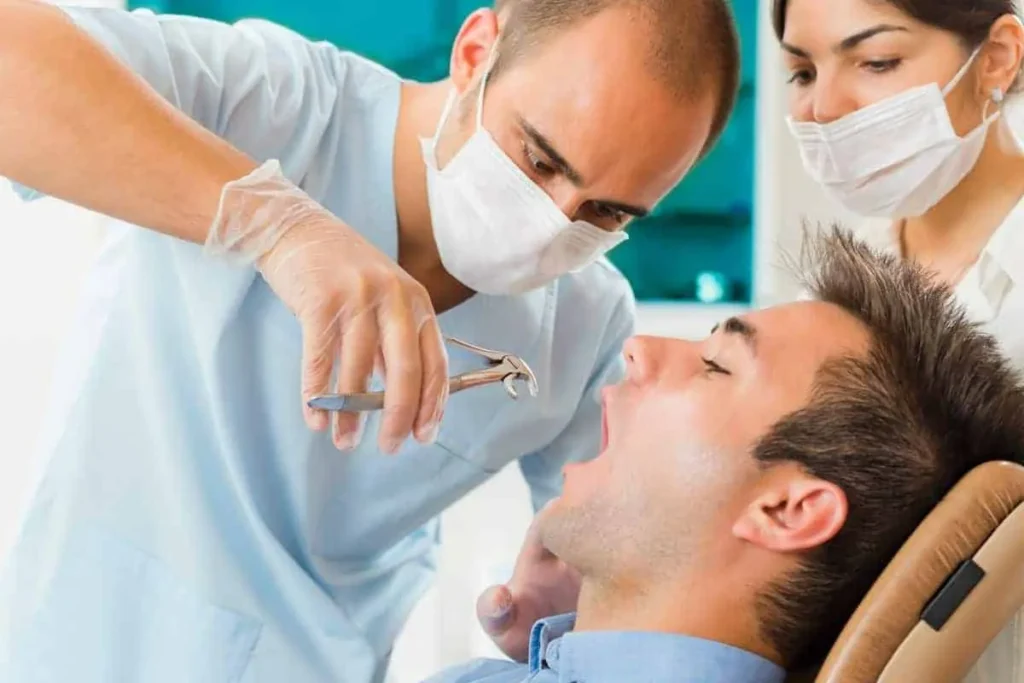
Before surgery, a detailed check is key to safely remove wisdom teeth near nerves. This step is vital to lower risks of impacted wisdom teeth extraction.
Advanced Diagnostic Imaging Techniques
Using the latest imaging is essential for partially erupted wisdom tooth removal. Tools like panoramic X-rays and Cone Beam Computed Tomography (CBCT) scans give clear views of the tooth’s location and nerves nearby.
A study in the Journal of Oral and Maxillofacial Surgery found CBCT scans are vital. They help see how close the nerve is to the impacted tooth.
Risk Evaluation Based on Age and Tooth Position
Assessing risks is also important before surgery. The patient’s age and tooth position are checked to understand the surgery’s complexity. The table below shows risk levels based on age and tooth position.
Consultation Questions to Ask Your Oral Surgeon
During your consultation, ask important questions. This ensures you know what to expect from your impacted tooth extraction. Some questions to consider are:
What are the possible risks and complications of my procedure?
What imaging methods will be used to check my wisdom teeth’s position?
How will my age and tooth position affect the surgery’s complexity?
Being well-prepared and asking the right questions can help reduce risks. This makes the recovery from wisdom teeth close to nerve extraction smoother.
Jaw Before and After Wisdom Teeth Removal: Surgical Procedure and Recovery
Removing impacted wisdom teeth is a detailed process. It requires special surgical methods to protect nerves and ensure a smooth healing. The surgery needs a deep understanding of the tooth’s location and the nerves around it. This knowledge helps in using specific techniques to lower the risk of problems.
Specialized Surgical Techniques for Nerve Protection
During impacted teeth removal surgery, oral surgeons use advanced methods to safeguard nerves. They handle the gum tissue carefully and design special flaps to avoid harming the lingual nerve. Also, cutting the tooth into parts makes it easier to remove, which reduces nerve damage risk.
Before surgery, advanced diagnostic imaging techniques help find the wisdom teeth’s exact location and how close they are to nerves. This info helps surgeons plan the best surgery approach, lowering the chance of complications.
Physical Changes in Jaw Appearance and Function
After wisdom teeth removal, patients might notice changes in their jaw. Swelling and some pain are normal and usually go away in a few days. The jaw might feel different because of the new bite and sutures, but this is temporary.
Swelling and discomfort are common post-surgery.
The jaw may feel different due to changes in the bite.
Sutures are typically removed within a week.
Timeline for Jaw Recovery and Sensation Return
The impacted wisdom teeth recovery time varies, but most see big improvements in a few weeks. It can take longer for the jaw and surrounding areas to feel normal again, sometimes months.
Initial recovery: 1-3 days.
Significant improvement: 1-2 weeks.
Full recovery and sensation return: several weeks to months.
Knowing about the surgery and recovery helps patients prepare for impacted wisdom teeth removal surgery. This knowledge makes the recovery smoother and more comfortable.
Conclusion: Managing Complications and Ensuring Proper Healing
Removing impacted wisdom teeth near a nerve is tricky. The procedure’s complexity can worry people about possible problems. But, thanks to advanced imaging and special surgery methods, results have gotten better.
Those with a wisdom tooth near a nerve need careful planning and precise surgery. Knowing the risks and taking steps early can help avoid problems during the removal.
Getting help early is important for a smooth recovery. Patients must follow their doctor’s advice to heal right. Working with skilled oral surgeons means getting top-notch care focused on your health.
FAQ
What are the risks associated with removing impacted wisdom teeth near a nerve?
Removing impacted wisdom teeth near a nerve can cause nerve damage. This might lead to numbness, tingling, or pain in the tongue, lip, or cheek. Using advanced imaging and careful planning can help reduce these risks.
How are impacted wisdom teeth evaluated before surgery?
Before surgery, impacted wisdom teeth are evaluated with advanced imaging. This includes 3D cone beam computed tomography (CBCT) scans. These scans help assess the tooth’s position and how close it is to nerves.
What are the different types of wisdom tooth impactions?
Impacted wisdom teeth are classified based on their orientation and depth. This classification affects how complex the removal will be.
How does age affect the risk of complications during impacted wisdom tooth removal?
Older patients face a higher risk of complications. This is due to denser bone and potentially more complex root anatomy.
What questions should I ask my oral surgeon during consultation?
Ask your oral surgeon about their experience and the type of anesthesia used. Also, ask about the expected recovery time and any risks or complications.
What specialized techniques are used to protect nerves during impacted wisdom tooth removal?
To protect nerves, surgeons use precise planning and gentle tissue handling. They also use advanced instruments to minimize trauma to surrounding nerves.
How long does it take to recover from impacted wisdom tooth removal surgery?
Recovery from impacted wisdom tooth removal surgery usually takes a few days to a week. Most patients can return to normal activities within a few days.
Will I experience numbness or changes in sensation after impacted wisdom tooth removal?
Some patients may feel temporary numbness or changes in sensation. This usually goes away within a few weeks to months.
Are impacted wisdom teeth harder to remove if they are close to a nerve?
Yes, impacted wisdom teeth near nerves are harder to remove. They require more careful planning and precise technique to avoid nerve damage. Experienced surgeons can manage these cases effectively.
What are the signs of potentially complications after impacted wisdom tooth removal?
Watch for signs of infection, prolonged numbness, or severe pain after impacted wisdom tooth removal. If you experience any unusual symptoms, contact your oral surgeon.
References
National Center for Biotechnology Information. Evidence-Based Medical Insight. Retrieved from https://pmc.ncbi.nlm.nih.gov/articles/PMC11989344/