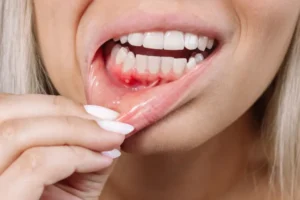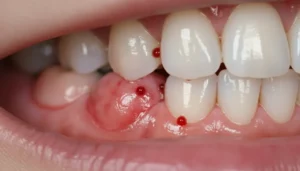



Seeing a dark patch or black dot in your mouth can be scary. But, most of these spots are not harmful. They are usually just a normal part of your mouth. Discover the best ways to treat black spots in mouth. Learn amazing facts about oral pigmentation and how to keep your mouth healthy.
GoldCity Center says that spots in your mouth can come from many things. These include smoking, dental work, and how your body naturally colors. Even though these reasons are common, it’s important to see a doctor to make sure they’re okay.
GoldCity Center is here to help you feel better about black spots in mouth. They focus on you and give you the care you need. They make sure you get the right help and advice.
Key Takeaways
Most intraoral pigmented lesions are benign.
Smoking, dental materials, and natural pigmentation variations are common causes.
Professional evaluation is necessary to distinguish between benign and serious conditions.
GoldCity Center offers trusted expertise and patient-centered care.
Tailored guidance and treatment are available for concerns related to black spots in the mouth.
Common Benign Causes of Black Spots in Mouth

Seeing a black spot in your mouth can worry you. But, many harmless reasons could be behind it. These include changes in skin color or reactions to dental materials.
Smoker’s Melanosis: Tobacco-Induced Pigmentation
Smoker’s melanosis is a condition that makes the inner cheeks and gums darker. It’s mainly caused by smoking. About 22 percent of smokers get this condition, often due to long-term smoking.
This darkening is usually not harmful and can go away if you stop smoking.
Tobacco-induced pigmentation can also lead to other changes in the mouth. Stopping tobacco use is a big step towards better oral health.
Amalgam Tattoos from Dental Procedures
Amalgam tattoos are another reason for black spots in the mouth. They happen when bits of amalgam filling get stuck in the mouth tissues during dental work. These spots are usually blue or black and harmless.
Benign Melanotic Macules: Oral Freckles
Benign melanotic macules are harmless dark spots or freckles in the mouth. They look like skin freckles and are not a worry. These spots can show up anywhere in the mouth and are usually the same color.
Oral Melanoacanthoma: Reactive Pigmentation
Oral melanoacanthoma is a rare, harmless condition that shows up as a pigmented lesion in the mouth. It’s often linked to trauma or irritation. This condition is usually not harmful and might go away on its own.
In summary, many black spots in the mouth are not serious. Conditions like smoker’s melanosis, amalgam tattoos, benign melanotic macules, and oral melanoacanthoma are common causes. Knowing this can help ease your worries and guide you on what to do next.
When to Worry About Black Spots in Mouth

Many black spots in the mouth are harmless. But, some can be a sign of a serious issue that needs quick attention. Knowing the difference between harmless spots and those that need medical help is key.
Warning Signs That Require Medical Attention
Some black spots in the mouth are a cause for concern. If you see any of these signs, you should see a doctor:
Asymmetry: Spots that are not round.
Border irregularity: Edges that are not smooth.
Color variation: Spots with different colors or an odd color.
Diameter: Spots that are big.
Evolution: Spots that change in size, color, or texture.
Changes in Size, Color, or Texture
Watching black spots for changes is important. If they grow, change color, or texture, it could be serious. For example, a black spot inside cheek that gets bigger or changes shape might need a closer look.
Some harmless conditions can change over time. But, any change should be checked to make sure it’s not something more serious.
Oral Melanoma: Symptoms and Risk Factors
Oral melanoma is a rare but serious condition. It shows up as dark brown to blue-black spots in the mouth. Knowing the symptoms and risk factors is important.
Symptoms include:
Dark spots in the mouth.
Lesions that bleed or have ulcers.
Pigmentation that spreads.
Risk factors include:
History of melanoma.
UV radiation exposure.
Genetic predispositions.
Spotting oral melanoma early can greatly improve treatment chances. So, any unusual spots or changes should be checked by a doctor right away.
Conclusion
Knowing about black spots in your mouth is very important for your health. These spots can come from many things, like smoker’s melanosis or even cancer.
If you see a black spot mouth or a dark spot inside cheek, watch it closely. Changes in size, color, or texture mean you might need to see a doctor.
A painless black spot inside cheek pictures can help when you talk to a doctor. Knowing what causes these spots helps you know when to get help.
If you’re worried about a dot in mouth cheek or any other unusual spot, see a doctor. Taking care of your mouth starts with knowing what to look for and acting fast.
FAQ
What are the common causes of black spots in the mouth?
Black spots are usually caused by natural pigmentation, bruising, dental fillings (amalgam tattoo), smoking, medications, and rarely oral cancer.
Is a black dot on the inside of my cheek a cause for concern?
It is usually harmless if small and unchanged, but should be checked if it grows, bleeds, or lasts more than two weeks.
Can a black spot in my mouth be a sign of oral cancer?
Yes, though rare, Oral cancer can sometimes appear as a dark patch or lump that changes over time.
What is smoker’s melanosis, and how is it related to black spots in the mouth?
Smoker’s melanosis is harmless dark pigmentation caused by tobacco use that may fade after quitting.
How can I determine if a black spot in my mouth is benign or not?
A spot that is small, uniform, painless, and stable is usually benign, but a biopsy is the only sure way to confirm.
Are dark patches in the mouth always a cause for concern?
No, many dark patches are harmless and related to normal pigmentation or minor injury.
Can a black lump on the inside of my cheek be a sign of a serious condition?
Yes, especially if it is hard, growing, painful, or ulcerated, and it should be evaluated by a dentist or doctor.
References
National Center for Biotechnology Information. Evidence-Based Medical Insight. Retrieved from https://pmc.ncbi.nlm.nih.gov/articles/PMC6405786/